


We're here when you need us most.
Skilled professionals you can trust.
No surprises. Just honest, fair pricing.
We stand behind our work every time.
Goddard has grown steadily over the past two decades into one of the most desirable communities on Wichita’s western edge. Families have been drawn here by the school district’s strong reputation, larger lot sizes, and a quieter atmosphere that still puts everything the metro offers within a reasonable drive. That growth pattern has produced a housing stock that skews newer than much of the surrounding area, with a significant concentration of homes built between the late 1990s and today.
On Time Plumbing, Heating, Cooling, and Electric serves Goddard homeowners with licensed electrical work grounded in honest communication, reliable scheduling, and workmanship that holds up over time. We understand what homes built during Goddard’s primary growth phase tend to look like electrically, and we also know that newer construction doesn’t come without its own set of challenges as households evolve and electrical demands grow beyond what the original build anticipated.
Goddard’s location west of Wichita places it in the direct path of storm systems rolling in off the high plains. The terrain here is flat and open, and there’s little to slow down weather that builds across southwest Kansas before arriving in Sedgwick County. Severe thunderstorms, rotating winds, and intense lightning activity are a consistent seasonal reality, and the electrical implications of that exposure are something Goddard homeowners deal with in ways that are specific to this part of the metro.
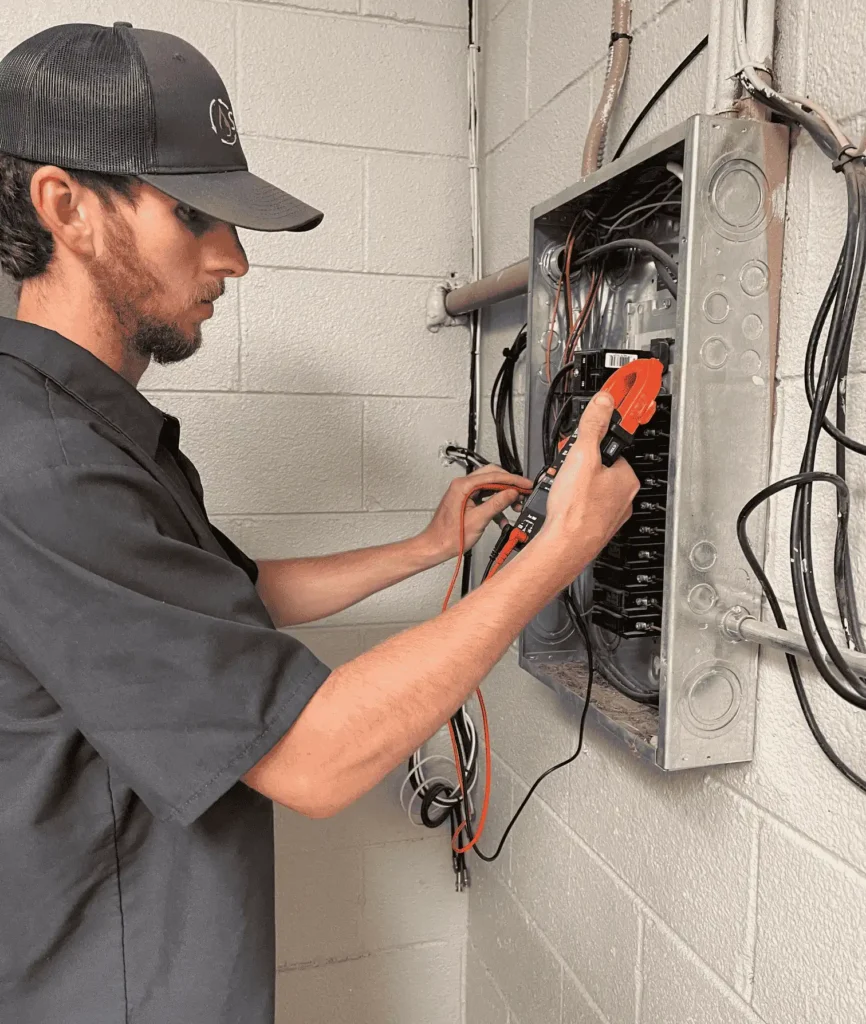
A common assumption among Goddard homeowners is that a house built in the last fifteen or twenty years shouldn’t have electrical problems worth worrying about. That assumption holds up in some cases and breaks down in others. Electrical issues in newer homes tend to look different than what we see in older properties, but they’re no less real, and some of them carry the same safety implications regardless of the home’s age.
Capacity is the issue that comes up most consistently. A home built in 2003 with a 150-amp panel and a household that now includes a home office, a Level 2 EV charger, a finished basement, and a modern HVAC system may be pushing against its original design limits in ways that show up as nuisance tripping, sluggish appliance performance, or circuits that simply can’t carry what’s being asked of them. The panel isn’t failing, exactly, but it’s no longer matched to the household using it.
Connection integrity is another area that newer homes aren’t immune to. Expansion and contraction from Kansas temperature swings, which range from subzero cold snaps in January to weeks of 100-degree heat in July and August, puts stress on wire terminations and breaker connections over time. Homes that have gone through fifteen or twenty years of those cycles can develop loose connections that generate heat without ever tripping a breaker.
These warning signs are worth a call in any Goddard home, new or old:
Catching these early is almost always less disruptive and less expensive than waiting until a failure makes the decision for you.
The most common upgrade conversation we have with Goddard homeowners starts with something specific, an EV charger that needs its own circuit, a basement finish that needs outlets and lighting, a detached garage that needs more than a single 15-amp circuit, and expands from there once we take a look at what the panel actually has available. It’s a pattern we see regularly in communities like Goddard where homes were built well but households have outgrown the original electrical plan.
Panel upgrades are the foundational move when available capacity is the limiting factor. Moving from 150-amp to 200-amp service, or from an older 100-amp panel in a home that’s been around since before Goddard’s main growth phase, gives the household room to operate without managing around its own electrical system. It also creates the headroom to add dedicated circuits for whatever the next project turns out to be, whether that’s a workshop circuit, a hot tub, or an outdoor kitchen on the back patio.
Whole-home surge protection is a particularly practical upgrade for Goddard given the open-plains storm exposure. We’ve seen what a single strong surge event can do to appliances, HVAC control boards, and home electronics in this part of Sedgwick County. A panel-level surge protector handles every circuit in the home simultaneously and provides a level of coverage that individual outlet protectors simply can’t match across an entire house. For homeowners who’ve replaced a refrigerator, a thermostat board, or a television after a storm, the math on surge protection tends to make immediate sense.
All installation and upgrade work is completed to current code and permitted through the appropriate local authorities when required, giving you a clean record of what was done and how it was inspected.

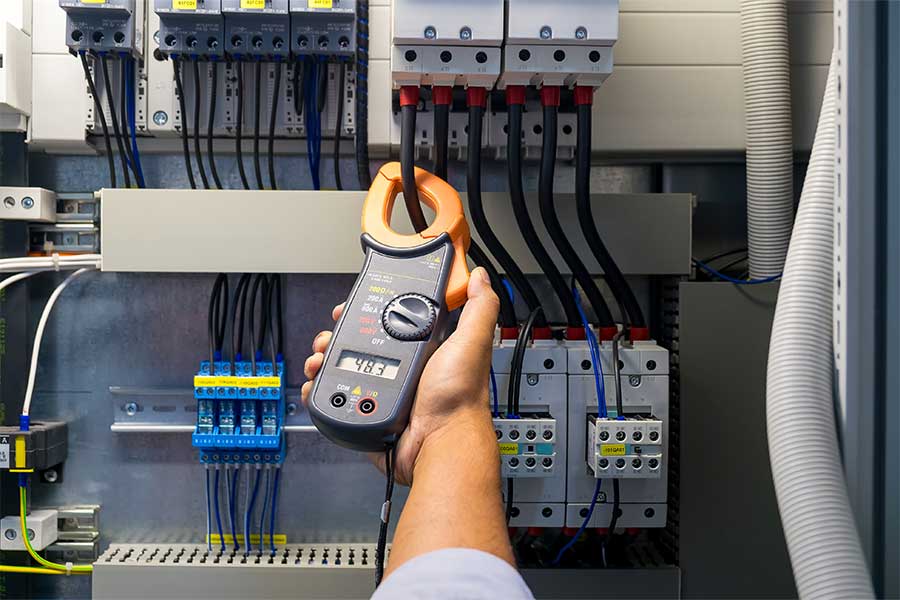
On Time offers Goddard homeowners a full range of residential electrical services through one reliable company. Our licensed electricians handle the following:
If you have a project in mind that isn’t on this list, reach out. Goddard homes vary enough in age and configuration that we’d rather hear what you’re dealing with directly than have you assume it falls outside what we do.
A homeowner named Jason called us wanting to add a Level 2 EV charger in his garage. His home was built in 2006 and he assumed the panel would have room for the dedicated 50-amp circuit the charger required. He’d done some reading online and figured it would be a straightforward afternoon job.
When our electrician pulled the panel cover and took inventory, the picture was a little more complicated. The panel was a 150-amp service with most of the available slots already filled, and the two open spaces were double-pole positions that didn’t have room for a 50-amp breaker without removing or consolidating something else. More importantly, the electrician found two tandem breakers installed in slots that weren’t rated for them, which is a code violation that the original builder or a subsequent electrician had introduced at some point.
Jason approved a panel upgrade to 200-amp service as part of the same visit scope. That resolved the tandem breaker situation, gave him the slot he needed for the EV charger circuit, and left four open positions for whatever comes next. The charger was installed and tested the same day the panel work was completed. Jason mentioned he’d been putting off the charger for months because he was worried about what it would cost if the panel needed work. Getting both done together ended up being more straightforward than he expected, and he left with a panel that actually matched how the house is being used today.


Goddard homeowners have high expectations for the contractors they invite into their homes, and we think that’s exactly right. Here’s what you get when you call On Time:
We’ve worked on homes throughout Goddard and understand the specific electrical profile of this community, from the homes built during the early growth years along 119th Street to the newer construction going up on the city’s expanding western edge. We show up prepared for what we’re likely to find, which makes the whole process faster and more straightforward for everyone.