


We're here when you need us most.
Skilled professionals you can trust.
No surprises. Just honest, fair pricing.
We stand behind our work every time.
Augusta is the kind of town where people know their neighbors and take pride in their homes. It sits about 25 miles east of Wichita along the Whitewater River, and while it has a quieter pace than the metro, Kansas summers hit just as hard here. When the AC goes out, the heat inside a home can become dangerous within hours.
On Time Plumbing, Heating, Cooling, and Electric brings dependable AC repair to Augusta homeowners — the same honest service, upfront pricing, and on-time arrivals we deliver across the region. We know what it means to be without cooling in the middle of a Butler County summer, and we take that seriously.
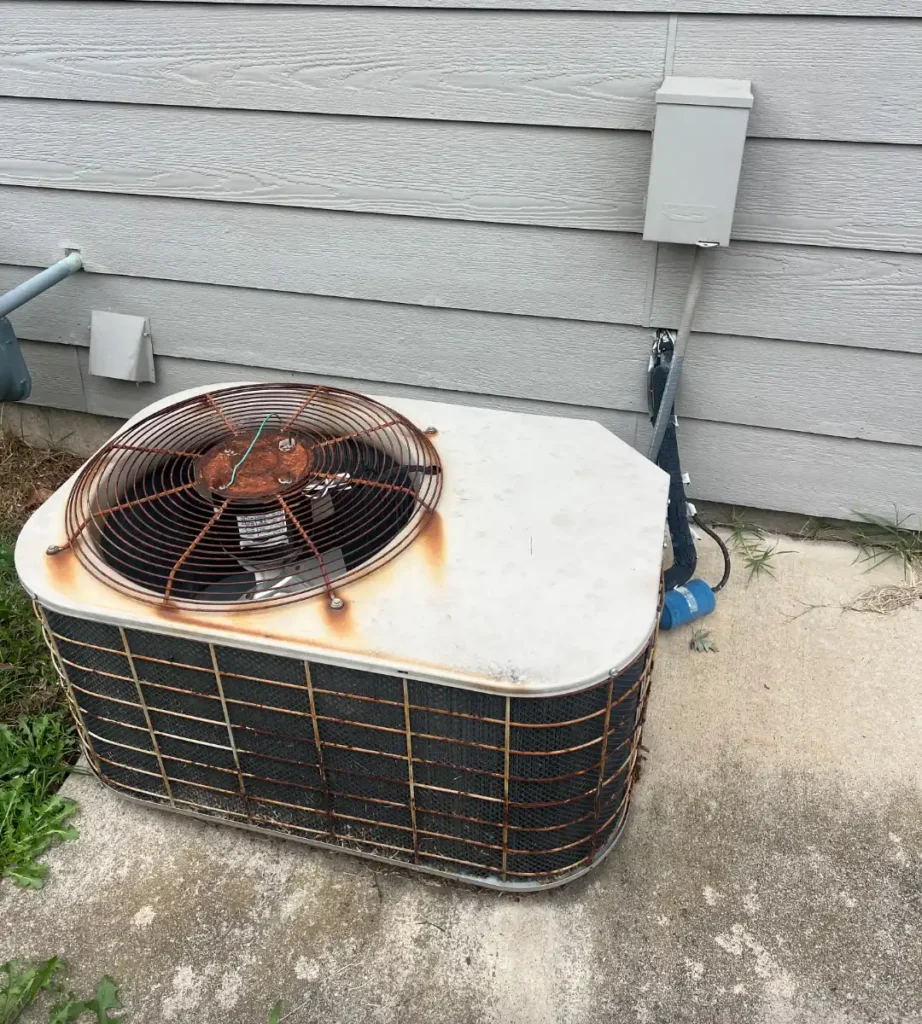
Getting an AC repair right starts with getting the diagnosis right. Our technicians don’t skip steps or assume the most obvious answer — they work through the full system to confirm exactly what failed and why before any parts get ordered or replaced.
A complete service visit covers refrigerant charge testing and leak detection, capacitor and contactor condition, blower motor and fan blade inspection, evaporator and condenser coil evaluation, condensate drain testing, and a full check of thermostat function and electrical connections. We service central air systems, heat pumps operating in cooling mode, and ductless mini-split units. Every repair is quoted upfront, and we don’t begin work until you’ve approved the price.
Augusta’s summer heat doesn’t leave much margin for a system that’s struggling. These are the signs worth acting on before things get worse:
A system showing any of these symptoms is already working harder than it should. Getting it looked at early typically means a simpler repair and a lower bill than waiting for a complete failure.
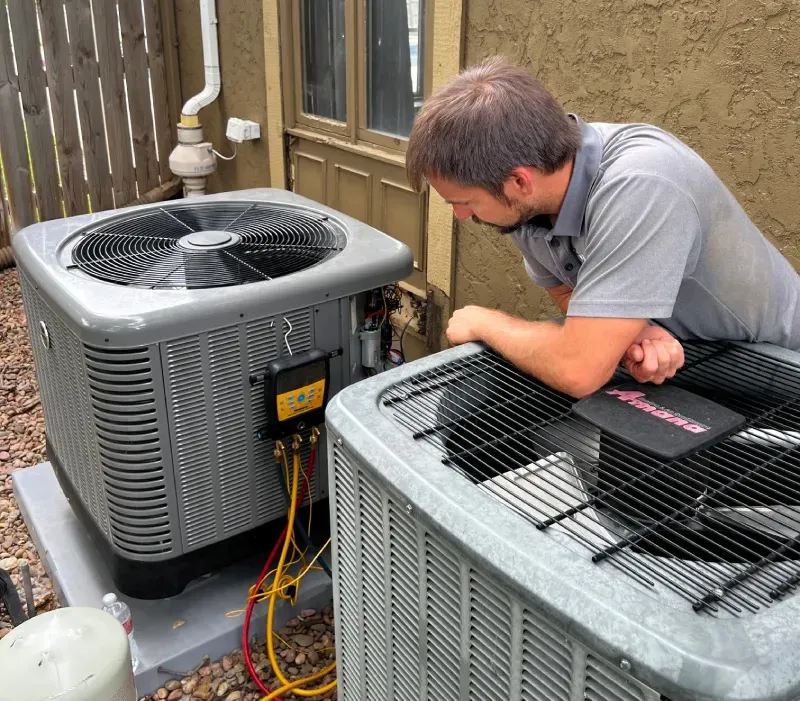
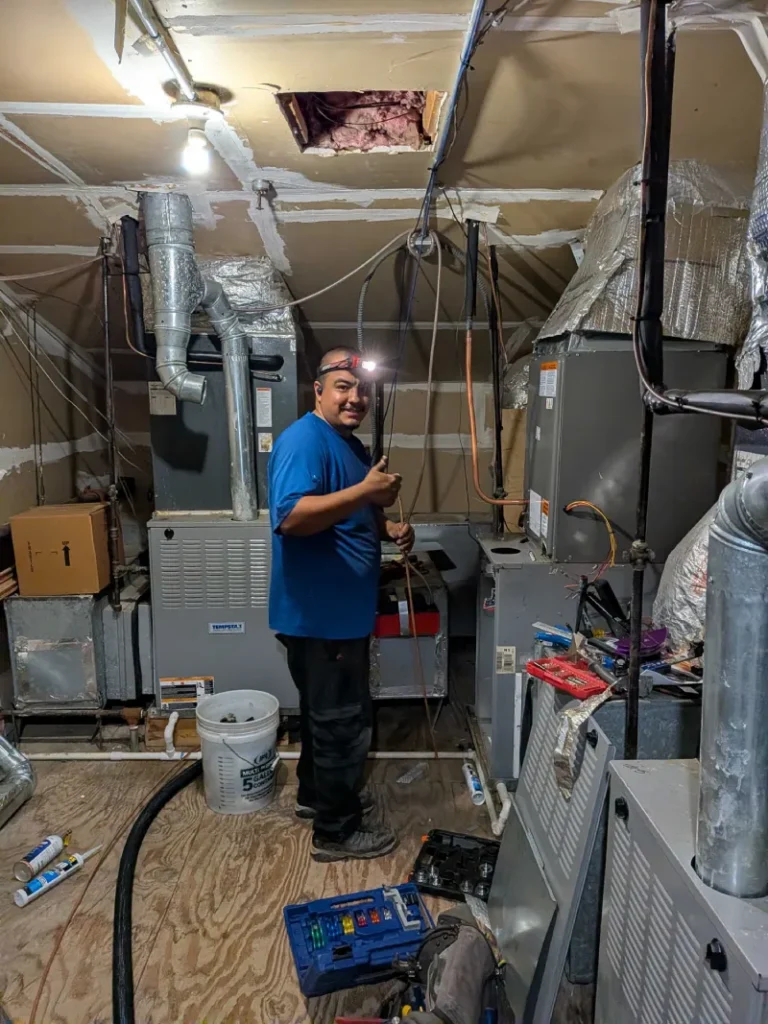
Augusta’s housing stock tells a different story than the newer suburbs to the west. Much of the city’s residential inventory was built between the 1940s and 1970s, and those older homes come with ductwork, insulation, and structural characteristics that place extra demand on air conditioning equipment. Ducts in older Augusta homes are often undersized by modern standards, poorly sealed at joints, or routed through unconditioned attic spaces where heat gain is significant. That means an AC system working in an older Augusta home may be fighting harder than the equipment specs were ever designed to handle.
The Whitewater River corridor also introduces a humidity dynamic that inland prairie communities don’t experience the same way. On humid summer days, moisture loading increases substantially, and systems that are marginal on capacity or low on refrigerant hit their limits faster. Augusta’s mature tree canopy — a genuine asset in many ways — also means outdoor condenser units are more likely to accumulate cottonwood seed and debris during late spring, which can choke airflow through the coil and cause the system to run hot. Homeowners here benefit from a pre-season coil cleaning more than most.
Early last July, we received a call from Frank, whose home near downtown Augusta had been struggling to cool for the better part of a week. The house was built in the 1950s, and the AC system — a central unit installed about a decade prior — had seemed to be keeping up until a stretch of back-to-back 100-degree days hit.
When our technician arrived, the outdoor unit was running but the airflow inside was noticeably weak. A look at the condenser coil revealed it was nearly packed solid with cottonwood fluff — a seasonal issue Augusta homeowners deal with every May and June, but one that compounds through summer if the coil never gets cleaned. The restricted coil had caused the system to overheat and eventually trip a high-pressure limit switch. We cleaned the coil, reset the system, and tested it through a full cycle. Frank hadn’t realized cottonwood debris could affect the AC that significantly. Before leaving, the technician walked him through what to watch for in future springs and recommended a yearly coil rinse as part of his regular maintenance.
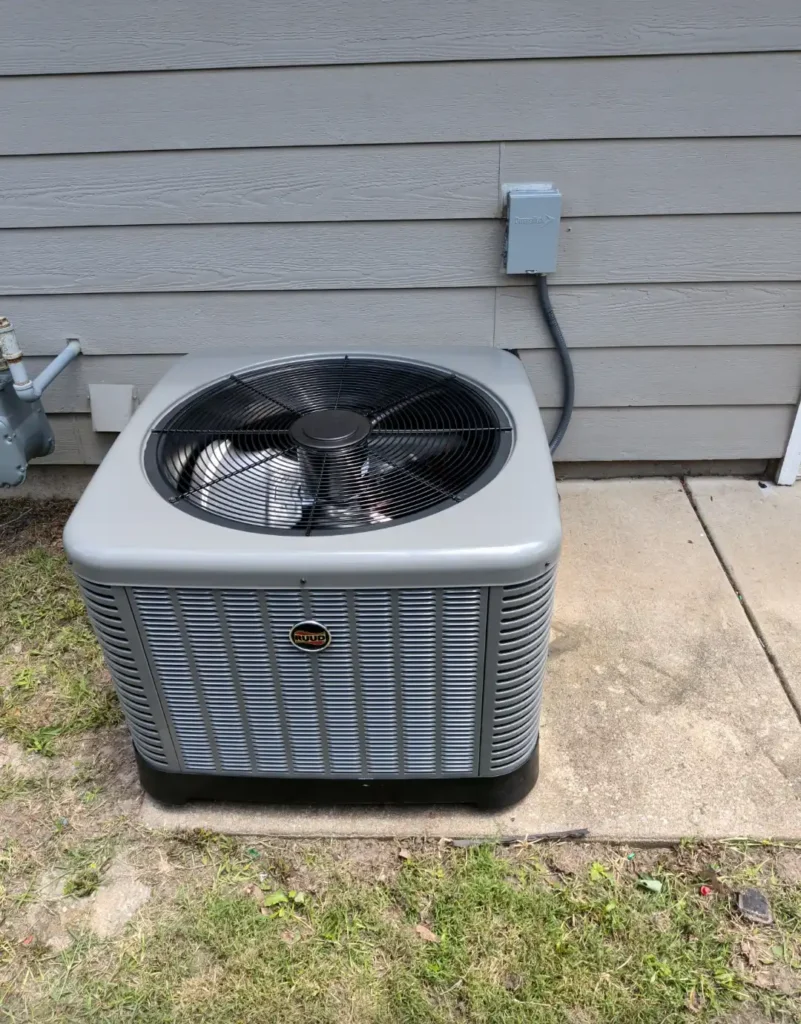
We treat every service call the same way — show up on time, be straight with the homeowner, and do the work right. Here’s what that means in practice: