


We're here when you need us most.
Skilled professionals you can trust.
No surprises. Just honest, fair pricing.
We stand behind our work every time.
Valley Center is a small city with a strong sense of community, sitting about 12 miles north of Wichita where the farmland starts to open up and the pace of life slows down a little. But Kansas summers don’t slow down for anyone, and when your AC stops working on a 98-degree afternoon, getting it fixed fast is all that matters.
On Time Plumbing, Heating, Cooling, and Electric serves Valley Center homeowners with the same dependable service we bring to every community in the region. We arrive on time, give you a straight answer about what’s wrong, and price the repair upfront before we start. That’s how we’ve built trust with homeowners across south-central Kansas, and it’s how we operate every single day.
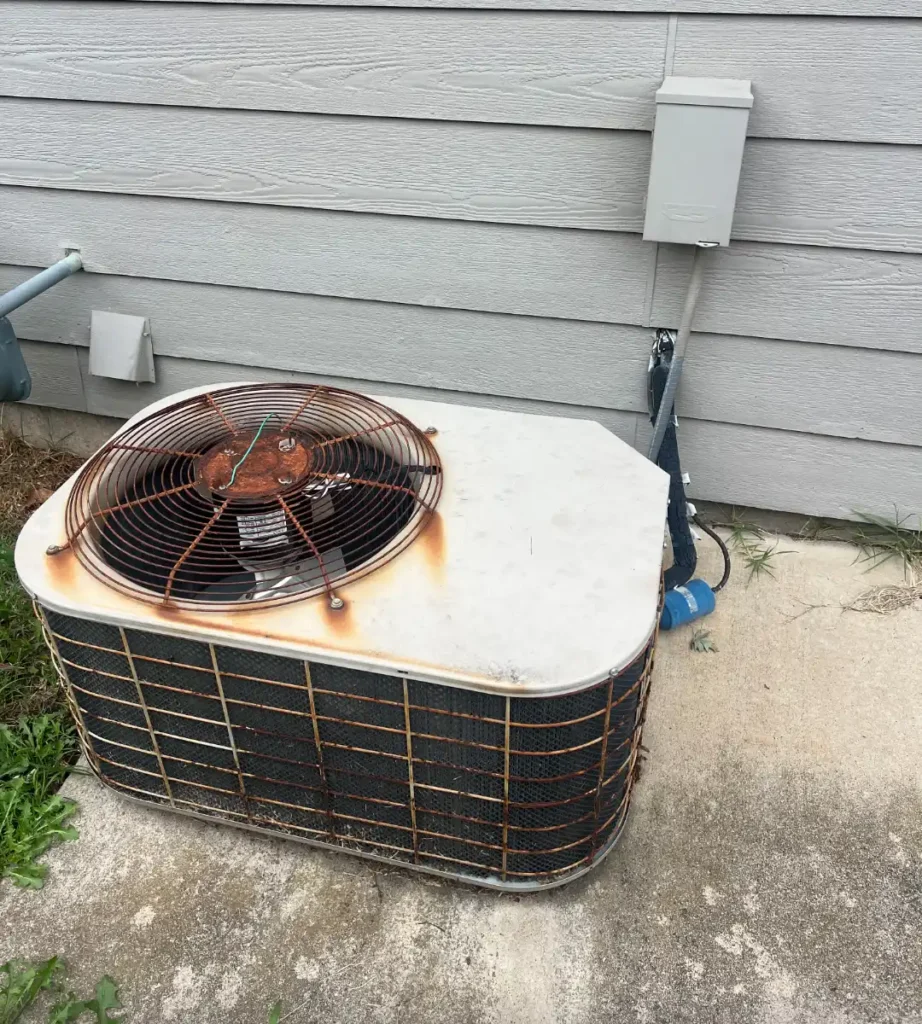
A proper AC repair doesn’t start with replacing parts — it starts with understanding what actually failed and why. Skipping that step is how homeowners end up calling for service a second time within the same season. Our technicians work through a full diagnostic before recommending anything.
Every service visit covers refrigerant charge and leak testing, capacitor and contactor condition, blower motor and fan performance, evaporator and condenser coil evaluation, condensate drain flow, and a thorough check of thermostat function and electrical connections. We repair central air systems, heat pumps running in cooling mode, and ductless mini-split units. Once we’ve confirmed the diagnosis, we explain it in plain language and get your sign-off on the price before work begins.
Most AC systems give you some warning before they fail completely. In Valley Center’s summer heat, it pays to catch those signals early. Watch for these:
Any of these symptoms means the system is already working harder than it should. A call placed today is almost always a simpler and less expensive fix than the same problem left to worsen through another week of summer heat.
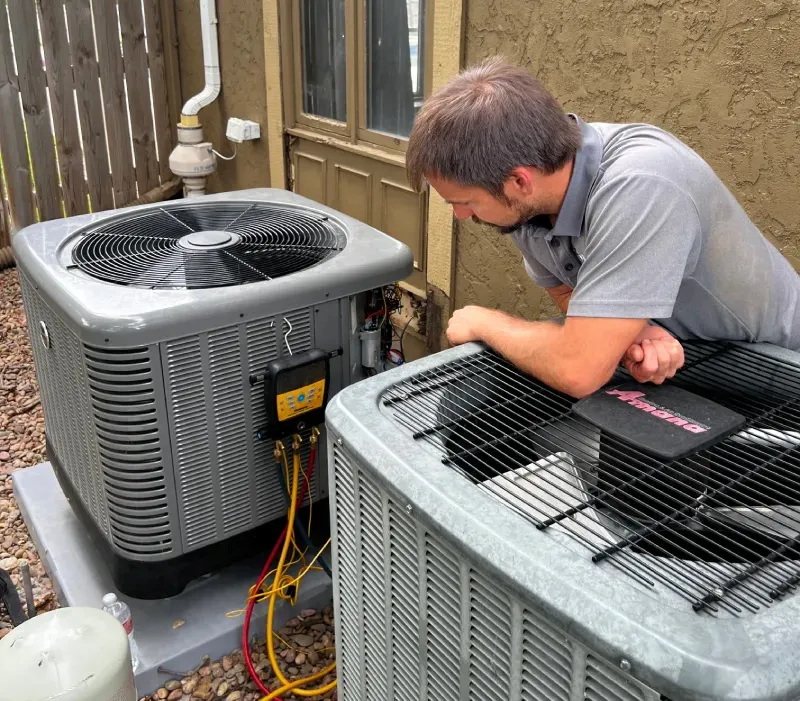

Valley Center straddles the transition between the suburban Wichita metro and the open agricultural land of Harvey and Sedgwick counties. That position matters for AC systems in ways that aren’t always obvious. Homes on the north and west edges of town are more exposed to the uninterrupted wind that sweeps across the Kansas plains — and while a breeze feels welcome in summer, sustained winds carry fine agricultural dust and crop particulates that gradually coat condenser coils and reduce their ability to shed heat. For homeowners near active fields, this seasonal fouling can happen faster than it would in a more built-up area.
Valley Center also draws a significant number of residents who are either new to homeownership or who moved from areas with different climate demands. That means maintenance histories are sometimes inconsistent — systems that were serviced regularly by a prior owner may have gone two or three seasons without a tune-up after a sale. Skipped maintenance cycles have a compounding effect: a dirty coil becomes a strained compressor, a marginal capacitor becomes a no-start situation, a slow refrigerant leak becomes a fully depleted system. Valley Center’s mix of older in-town homes and newer construction on the outskirts also means repair needs here range from addressing aging infrastructure to diagnosing first-time failures on equipment that simply hasn’t been cared for properly since it was installed.
Last summer we got a call from Brenda, whose home on the west side of Valley Center had been progressively losing cooling capacity over the course of about three weeks. She’d noticed it first as a minor thing — the house taking a little longer to cool down in the afternoon — but by the time she called us, the system was running almost continuously and barely keeping the interior below 80 degrees.
Our technician found the condenser coil heavily coated with a fine layer of dust and agricultural debris — the result of her home’s proximity to active crop fields and a full season without a coil cleaning. The coating had reduced heat transfer enough that the system was running at elevated head pressure, putting real strain on the compressor. We performed a thorough coil cleaning, checked refrigerant levels, and tested the system through a full cycle to confirm it was back to normal operating pressures. The improvement was immediate — the house reached setpoint within 45 minutes of the cleaning. Brenda mentioned the system had never been professionally cleaned since the home was built. Getting it on an annual maintenance schedule would keep that from becoming a recurring problem each summer.


We show up, we tell the truth, and we do the work right. For Valley Center homeowners, that means: