


We're here when you need us most.
Skilled professionals you can trust.
No surprises. Just honest, fair pricing.
We stand behind our work every time.
Haysville is a close-knit community tucked into the southern edge of the Wichita metro, and most of the people who live here have been here a while. The homes have history, the neighborhoods have character, and the summers have heat — the same relentless south-central Kansas heat that makes a working air conditioner one of the most important systems in the house.
On Time Plumbing, Heating, Cooling, and Electric serves Haysville homeowners with AC repair that’s honest, reliable, and priced upfront. We show up when we say we will, explain exactly what we find, and don’t start any work until you’ve agreed to the price. That’s how we operate every day, on every call.
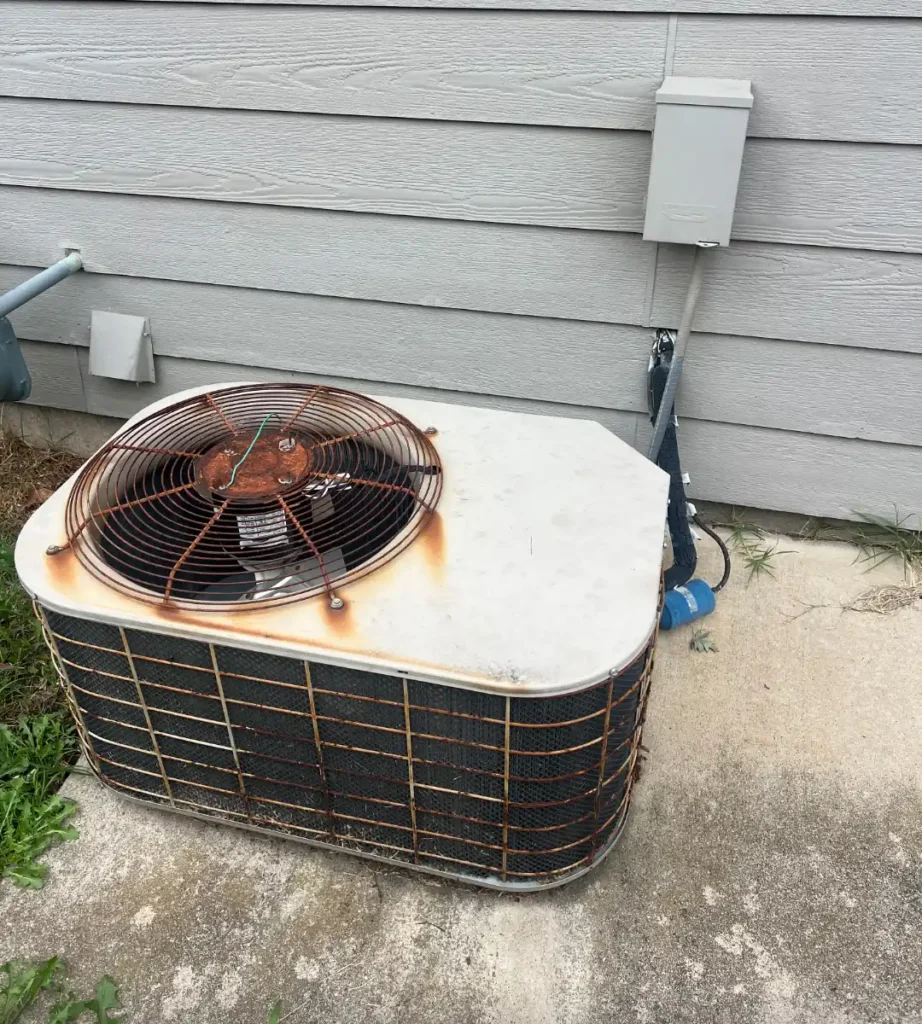
Diagnosing an AC problem correctly the first time is the difference between a repair that holds and one that comes back around in three weeks. Our technicians don’t shortcut the diagnostic process — they work through the system methodically because the symptom a homeowner describes and the root cause behind it aren’t always the same thing.
Every service visit covers refrigerant charge and leak testing, capacitor and contactor condition, blower motor and fan operation, evaporator and condenser coil evaluation, condensate drain function, and a thorough review of thermostat calibration and electrical connections throughout the system. We service central air systems, heat pumps running in cooling mode, and ductless mini-split units. Once we know exactly what failed and why, we explain it clearly and give you a firm price before any repair work begins.
Haysville summers move fast, and a system that’s starting to slip won’t hold on for long once the heat settles in. These are the signals worth acting on before a struggling system becomes a failed one:
Catching these early almost always means a simpler repair. A system that’s been fighting through several weeks of symptoms typically has more wear to address than one that gets looked at when the signs first appear.
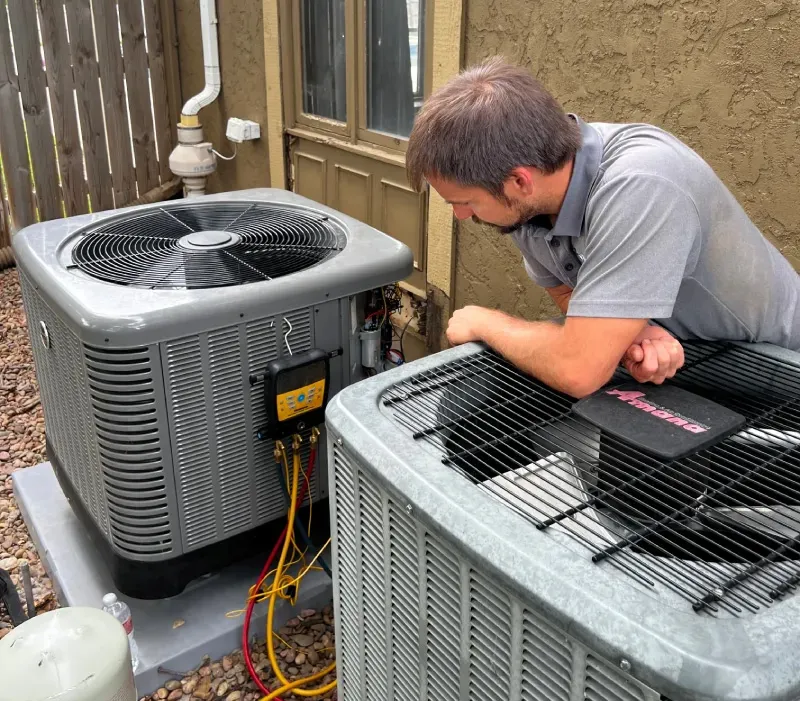
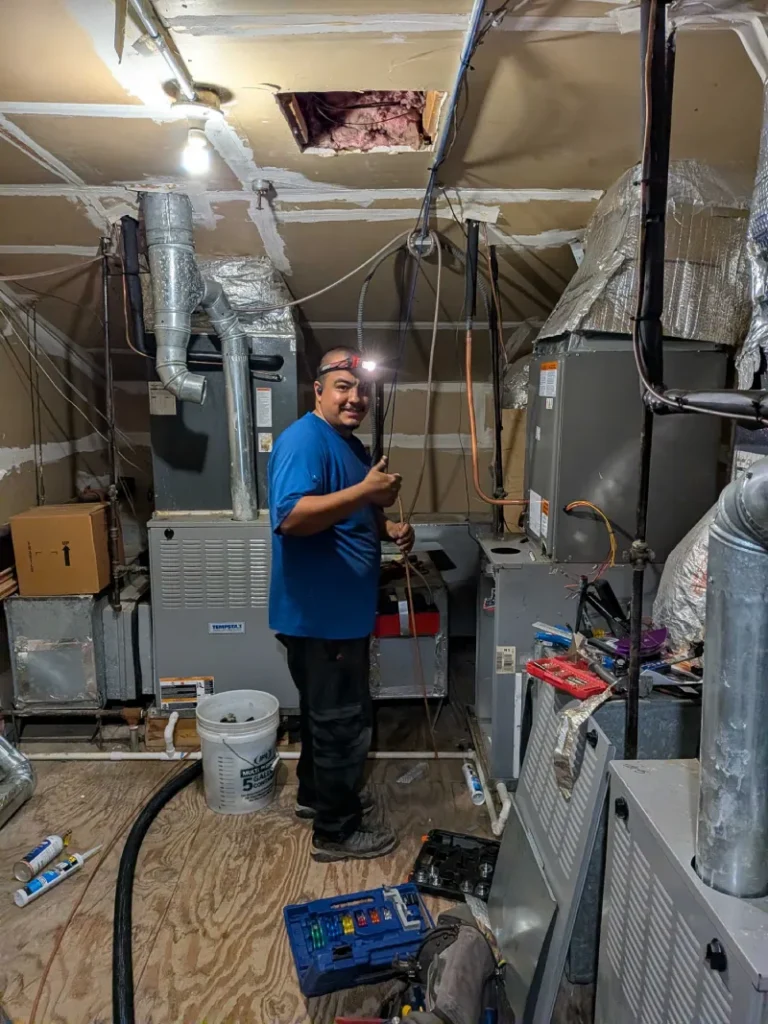
Haysville’s residential landscape is dominated by homes built between the 1950s and 1980s — a generation of construction that predates modern energy codes, modern duct design standards, and in many cases, the central air conditioning systems that were retrofitted into them years later. That retrofit history matters. When AC systems are added to homes that weren’t originally designed around them, the ductwork is often a compromise — routed through tight spaces, sized for the available path rather than the ideal airflow, and sealed with materials that have long since dried out and cracked. The result is a system that works against itself: the equipment may be reasonably sized, but leaking or undersized ducts bleed conditioned air before it reaches the living space, forcing longer run times and more wear per cooling cycle.
The age of Haysville’s housing also means many homes are on their second or third AC system, and not all of those replacements were sized or installed with the existing duct infrastructure in mind. An oversized system in a leaky duct system short-cycles constantly, never running long enough to properly dehumidify the space. An undersized one runs endlessly and still can’t keep up on peak days. Both scenarios accelerate component wear. For Haysville homeowners, understanding how the duct system interacts with the AC equipment is often the missing piece in a repair conversation that keeps coming back to the same complaints season after season.
We received a call from Gary last July. His home, a well-kept ranch-style built in the late 1960s near Kansas Avenue, had been short-cycling badly for about a week — the system would run for a few minutes, shut off, sit for a short while, then kick back on again. The house never felt comfortable, and his energy bill for the previous month had been noticeably higher than usual.
Our technician found the evaporator coil was iced over from top to bottom, which was causing the system to trip the high-pressure limit and shut down repeatedly. Underneath the ice, the coil itself was heavily restricted by years of fine dust accumulation — the kind that bypasses older, less effective filters common in homes of that era. Once we thawed the coil and cleaned it thoroughly, we checked the refrigerant charge and found it slightly low, likely from a slow leak at an aging Schrader valve. We repaired the valve and restored the refrigerant to the correct level. Gary mentioned the system had short-cycled briefly last summer too, but he hadn’t thought much of it at the time. That earlier episode had almost certainly been the same problem beginning to develop — catching it then would have meant a simpler service call and a coil that hadn’t spent a season icing over repeatedly.
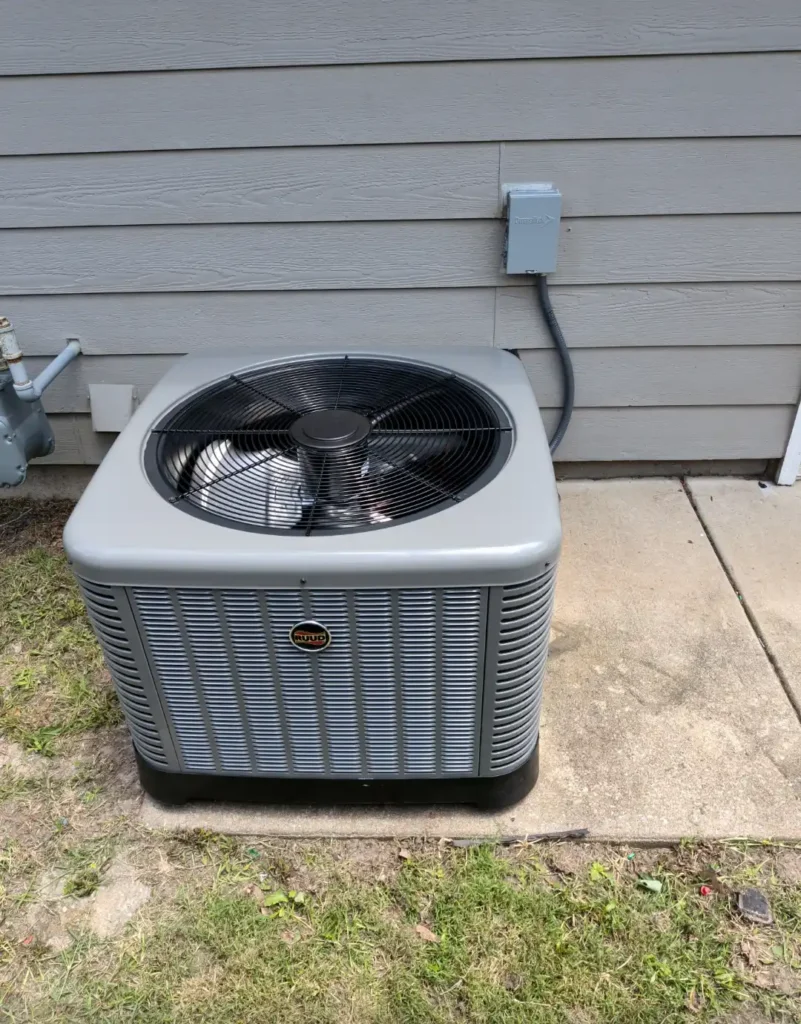
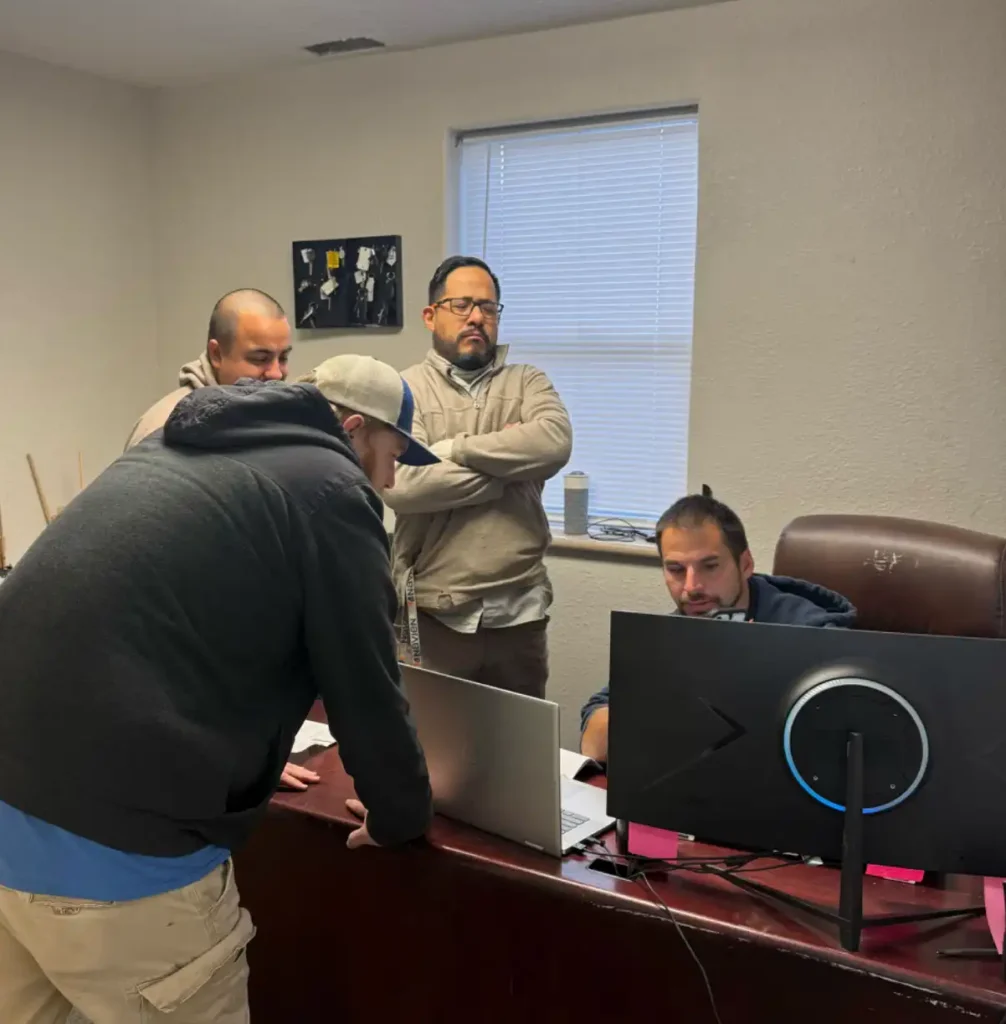
We’ve built a reputation across the south Wichita metro by being straight with homeowners and doing the work right. Here’s what that looks like when you call On Time: