


We're here when you need us most.
Skilled professionals you can trust.
No surprises. Just honest, fair pricing.
We stand behind our work every time.
Goddard has grown steadily over the past two decades into one of the more sought-after communities on Wichita’s west side. Larger lots, newer homes, and a quieter setting draw families out this way — but the trade-off is that when something goes wrong with your AC, you’re not around the corner from a service company. You need someone who actually shows up when they say they will.
On Time Plumbing, Heating, Cooling, and Electric serves Goddard homeowners with dependable AC repair, upfront pricing, and technicians who treat your home with care. We make the drive out west because Goddard homeowners deserve the same fast, honest service as anyone else in the metro.
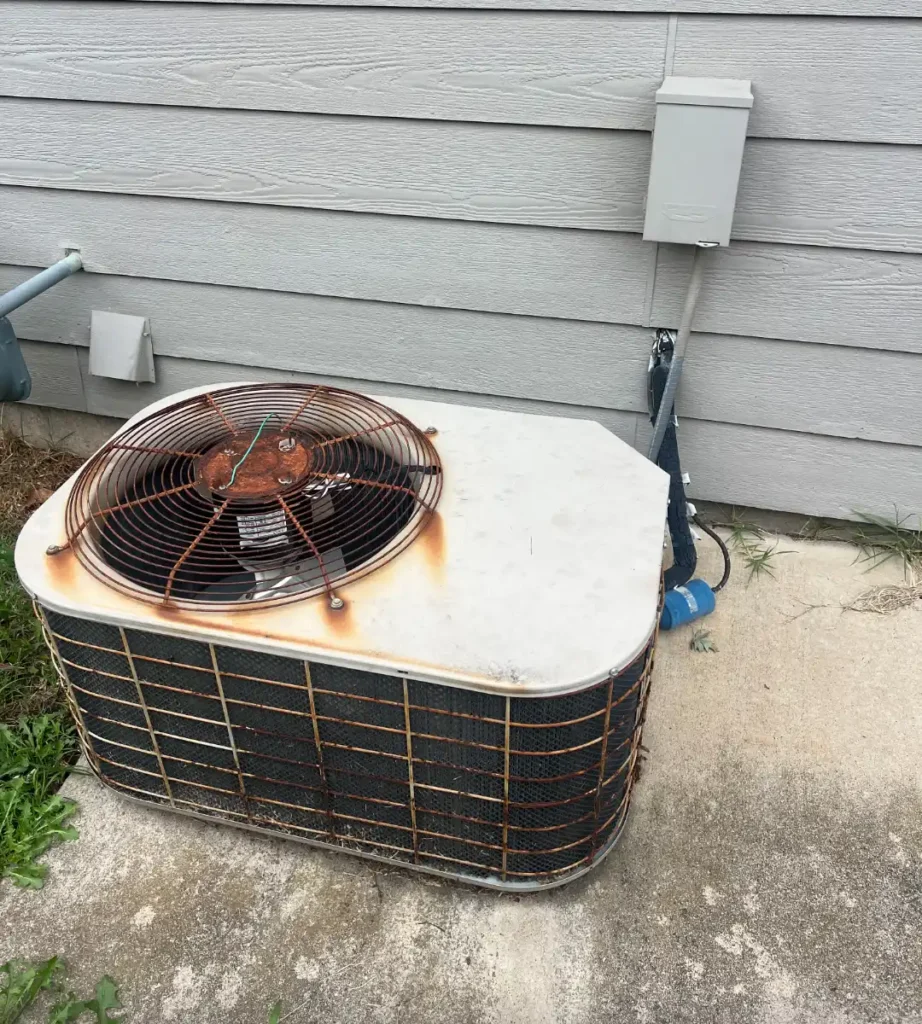
No two AC problems are exactly alike, and a rushed diagnosis is how simple repairs turn into repeat service calls. Our technicians take the time to work through the full system before landing on a conclusion — because understanding why something failed matters as much as fixing what broke.
Every visit covers refrigerant charge testing and leak detection, capacitor and contactor evaluation, blower motor and fan operation, evaporator and condenser coil condition, condensate drain function, and a complete check of thermostat calibration and electrical connections. We service central air systems, heat pumps in cooling mode, and ductless mini-split units found in many of Goddard’s custom builds. We explain what we find in plain terms and give you a firm price before any repair work starts.
Goddard’s summers are hot and dry, and a system that’s starting to struggle won’t last long before it gives out entirely. These are the signs worth paying attention to:
Getting ahead of these symptoms usually means a faster repair and a lower bill. A system that’s been struggling through several hot weeks tends to have more wear to address than one caught early.

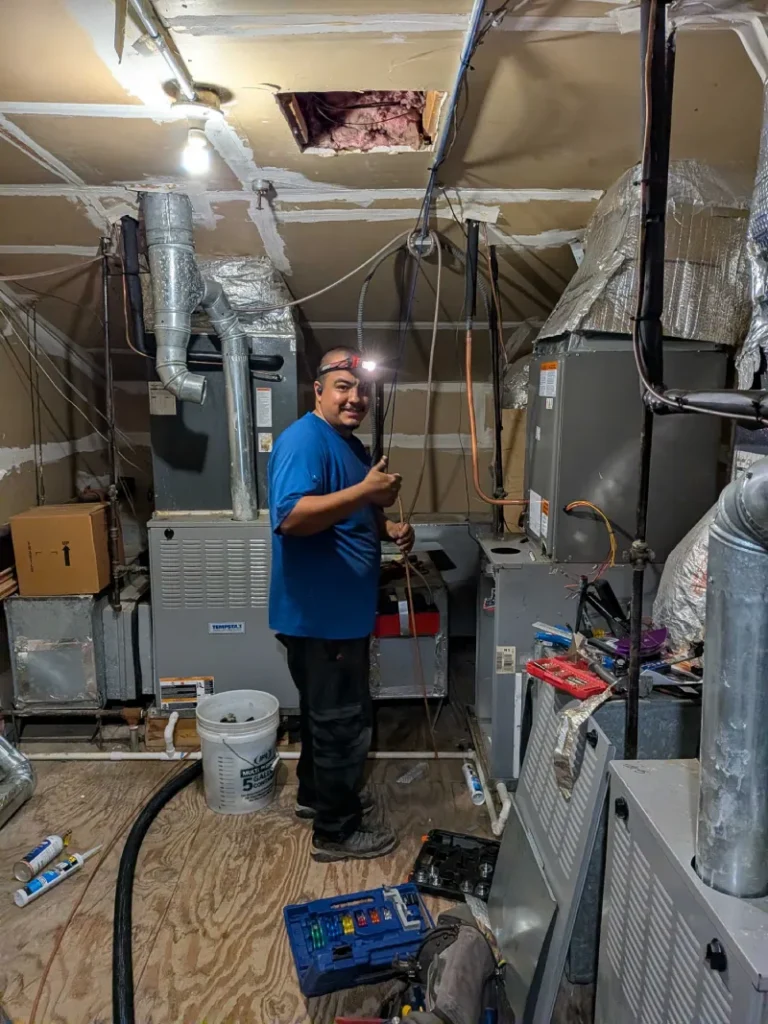
Goddard’s location on the western edge of the Wichita metro puts it squarely in the path of the prevailing southwest winds that sweep across the Kansas plains. That wind is a constant presence here, and it carries with it fine soil particles and grassland dust from the open terrain stretching west toward Pratt and Kingman counties. Condenser units in Goddard accumulate this particulate steadily through the season, and homes on the outer edges of development — where there are fewer structures and windbreaks to slow things down — see it worse than those closer to the city core.
Goddard also sits at a slightly higher elevation than the Arkansas River valley to the east, which means it tends to run drier and hotter during peak summer stretches. Lower relative humidity might sound like a good thing, but it creates its own problem for AC equipment: systems that were sized and commissioned in more moderate conditions can struggle when ambient temperatures stay above 95 degrees for days at a stretch, pushing the refrigerant circuit toward its design limits. Goddard’s newer housing stock — most of it built since the early 2000s — means many systems are well within their service life, but that also means homeowners sometimes underestimate the value of routine maintenance on equipment they consider relatively new. A system that has never had a professional coil cleaning or refrigerant check is not necessarily in good shape just because it was installed recently.
We got a call last August from Joel, whose home on a newer street southwest of Goddard’s town center had stopped cooling entirely on a Sunday afternoon. It was the middle of a stretch of days over 100 degrees, and by the time he called us, the interior had already climbed into the mid-80s with no sign of coming back down.
When our technician arrived, the outdoor unit was running but the compressor was cutting out after a few seconds. The diagnosis pointed to a combination of two problems working against each other: a weakened start capacitor that was no longer giving the compressor enough initial torque to start cleanly, and a condenser coil fouled enough with plains dust that the system was running at elevated head pressure even when conditions were otherwise normal. Either issue alone might have allowed the system to limp through the season. Together, they were enough to cause repeated compressor dropouts under peak load. We replaced the capacitor, cleaned the coil, and confirmed the compressor was starting and running cleanly through a full cycle before leaving. Joel’s house was back to temperature within two hours of our arrival.

We make the trip out to Goddard because homeowners here deserve reliable service — not a long wait or a vague estimate. Here’s what you get when you call On Time: